We remain fully operational. Our teams are working around the clock to ensure your deliveries continue safely.

DOWNLOAD THE APP


Customer Services
Copyright © 2025 Desertcart Holdings Limited
DOWNLOAD THE APP
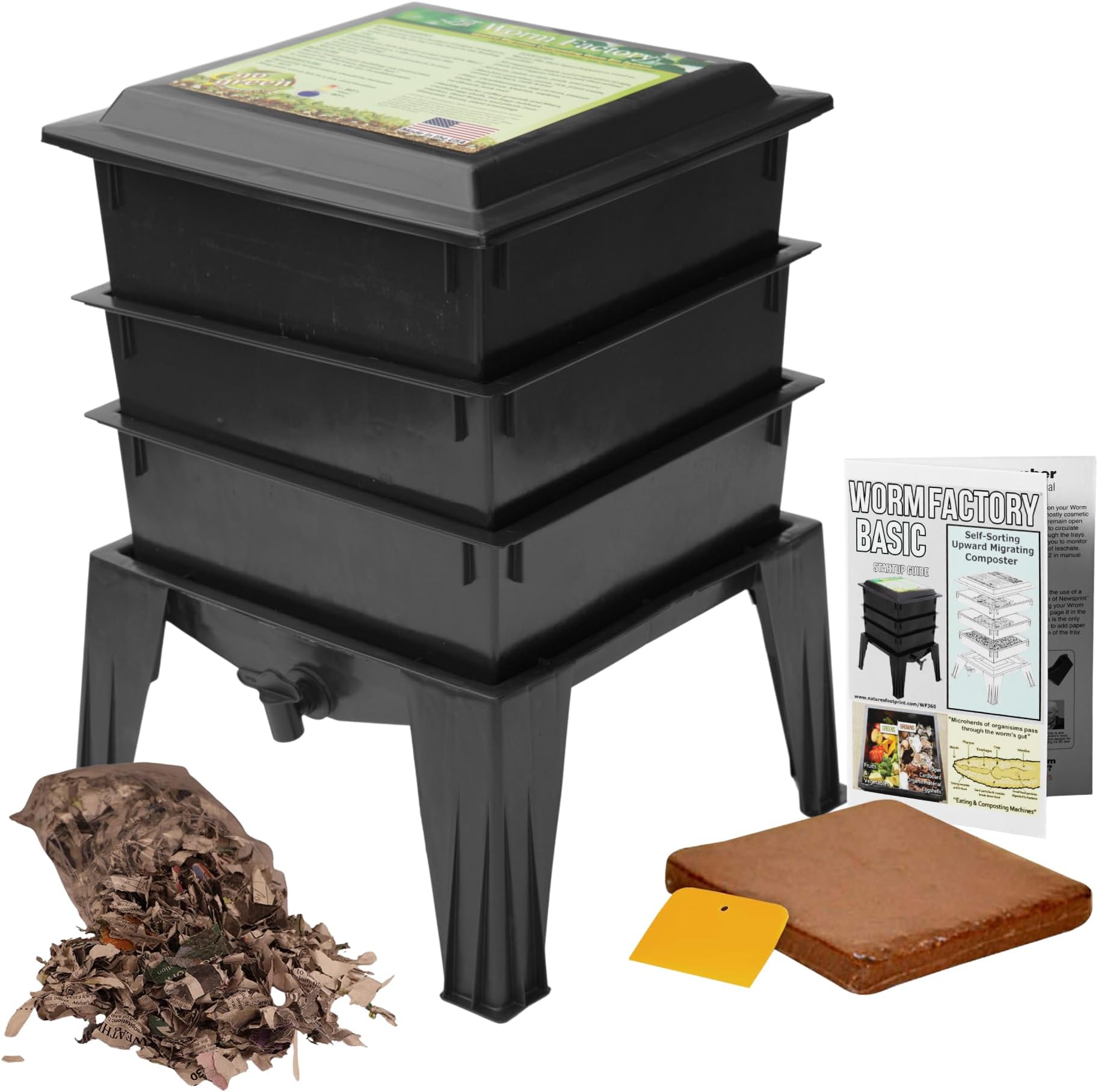



🌱 Composting Made Chic: Join the Green Revolution!
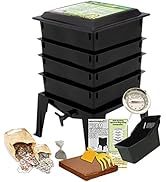
The Worm Factory Basic 3 Tray Black Worm Composter is a fully assembled, durable, and space-efficient composting system designed for home food waste recycling. Made in the USA, it features a customizable 3-tray design that encourages efficient composting while being user-friendly and odor-free.






| ASIN | B08HW2QKMH |
| Best Sellers Rank | #921,044 in Home & Kitchen ( See Top 100 in Home & Kitchen ) #203 in Indoor Compost Bins #41,338 in Kitchen Storage & Organization |
| Brand | Worm Factory |
| Brand Name | Worm Factory |
| Color | Black |
| Customer Reviews | 4.4 out of 5 stars 1,857 Reviews |
| Global Trade Identification Number | 00043433940819 |
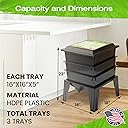
| Item Dimensions L x W x H | 18"L x 18"W x 22"H |
| Item Weight | 11 Pounds |
| Manufacturer | Nature's Footprint |
| Material | Plastic |
| Material Type | Plastic |
| Product Dimensions | 18"L x 18"W x 22"H |
| Shape | Square |
| UPC | 043433940819 |
| Unit Count | 1 Count |
M**E
Extremely helpful for beginners!
I was very pleased with the wealth of information provided with this worm bin. I was initially expecting to only get a simple worm bin with a few bedding materials and a few instructions on how to set it up. But instead it comes shipped with a FULL booklet on just about EVERYTHING you need to know to get started in vermiculture. I appreciate the fact that these sellers are committed to the success of their customers by providing so much useful information. The booklet details how to troubleshoot and identify problems that may arise, how and what to feed your worms, how to properly maintain the bin over months, how to harvest the castings from the bin when it's ready, anatomy and life cycle of worms, how to keep your worms happy, and so much more! Receiving this booklet was definitely a breath of fresh air compared to all the small sheets of papers I get with broken translated English printed on them. I also like how you get enough bedding to fill two trays so you will be set for several months before you need to go get some additional materials for bedding (if you don't already have some). Currently, the worms have been quite happy in their new home (as far as I can tell). I've had the bin for about a month now and it has worked well for me. Obviously I will need more time to fully access this product, but so far, it's been easy to use and useful. A word of caution for those that are new to vermicomposting: When you add your new worms to the bin, make sure the environment is just to their liking (how to do this is explained in detail in the manual that comes with this item). When I received my worms in the mail, they were obviously stressed from the cross-country trip they had to make so they probably weren't the happiest of worms. After putting them in the bin, they WILL go exploring and this worm bin WILL NOT contain them. The bin is designed to allow proper air flow so it is far from being completely sealed. If the worms are not happy and want to explore the world around them, they will! Since I had to immediately leave after I added the worms to my bin, I came home to several worms (around 10) crawling around on the floor around the bin! It is suggested to turn on a light right above the bin to discourage them leaving, and I thought turning on the kitchen light would be enough. I was definitely wrong! I highly recommend getting a very bright desk lamp of sorts to shine *directly* above the bin for the first few days. After I got this bright lamp in place and adjusted the moisture levels of the bin, the worms were much more cooperative in staying inside. Now that the worms have acclimated to their new environment, I have no issues with them staying inside the bin and have no more need for the bright lamp. So to recap, when you get your worms, make sure you've got a little pile of food waiting for them and make sure the moisture levels are proper (not too dry, not too wet). Then make sure you've got a bright light to setup up directly outside of the bin that you can shine on it. If you do these things, you will not end up like me and find a bunch of worms crawling all over your floor and walls. Unfortunately, I lost a handful of worms due to my initial problems (they can dry out pretty quick and will die if left outside the bin), but the worms that are left are happily crawling around their food now. I would highly recommend ordering your worms after your worm bin so you have time to get things situated. More importantly, you'll have time to read through booklet that will ensure you know what you're doing when the time comes! Definitely read through the booklet since its got so much good information. I've been very happy with this product and would definitely recommend it to anyone that is interested in vermicomposting. The bin does not stink if taken care of properly, and I haven't even gotten any fruit flies yet! The worms mind their own business and just eat and poop all day--exactly what I want them to do!
E**N
So easy
I'm new to composting in all forms. Not having an ideal location for traditional composting, I decided to go with worms and selected this unit back in January. I've waited to review to see how it would go. It's been great. This unit is ideal for a beginner or someone who just wants a very low maintenance way to compost. The unit is is sturdy and in my opinion, very well designed. Could I do it cheaper by building a unit out of a Rubbermaid tub? Absolutely. Is this still better? For me, yes. I like that I can just add a new tray and the worms will move out of the old tray when they are done, and I don't have to do too much digging around. The instructions book and video tell you everything you need to know and like others have said, there is no stink. I keep it in my garage, but only to keep my household pets from investigating. This unit could easily be kept in a kitchen or closet with no issues. 6/23/13 update I finally harvested som castings today, and yes, I've been putting it off and could have done some time ago. Some lessons learned: Egg shells are great! but they don't break down quickly. Some people grind them in a blender. I've found that just putting them all in a plastic bag and crushing them by hand works pretty effectively. I did try the grinding method in my little personal blender and it was really rough on the blender. The hand crushed method seems to work just as well...just crush as finely as possible. I don't have a lot of patience for much pre-processing of scraps and haven't found much need for it. With that said, I found a lot of pieces of asparagus in my "finished" tray. So Thinks that are tough to break down I will probably freeze in the future to do some damage to the cell walls and make it mushier. This brings me to my biggest lesson learned. I have been too hesitant to add new trays and overfilled my first tray, filling it with about twice as much as I should have. Don't be afraid to add new trays. The 3 lessons learned contributed to a fairly time consuming harvest. The left over eggs and asparagus kept worms in my bottom tray when they should have been moving up to the next tray. Overall, I am still very happy with this product and look forward to seeing how my beds with castings perform when compared to my beds without any. Not really a lesson learned so much as an observation/preference. Coir works better than newspaper alone for bedding. I only put coir in my first tray and it just feels nicer than what I"m seeing in the other two trays that have large mushy clumps of newspaper. I put a fair amount of newspaper in the first tray too, and it just seemed to break down better when used with coir. I've read some people like the pine cat litter as a cheaper alternative to coir, but haven't tried it. I would be interested to hear anyone else's experience.
S**R
Still going strong at 10 years of use!
This worm factory is working well and I would recommend it. After 6 months of use, I am now able to make a tray full of vermicompost about every month. I want to include some of my experiences here. My bin is outside for the warmer months, but will be moved into the kitchen soon. If you follow instructions and freeze or microwave scraps and bury them in the bedding, you will minimize or eliminate potential problems with fruit flies or other bugs. I avoid putting any smelly veggie scraps into the bin, and just throw these in an outside compost pile (broccoli, onions, asparagus, etc). I also cover the top bin with several layers of newspaper, then put the lid on. Currently my bedding material is the 1/2 brick of coir (I score deeply with a bread knife, then find a slightly uneven surface to break the brick with my foot and weight), some pumice, and loads of shredded cardboard (pizza boxes, small boxes, egg cartons, toilet paper rolls) and a bit of shredded paper. (Shredding accomplished with paper shredder and not by hand). I wet these per instructions and fill each bin almost full (because it will ultimately pack down much more). I would like to use more composted leaves in the future, but not ready for that yet. It amazes me to watch this cardboard become compost in about 3 months. You must be patient when you start and not over feed your 1 or 2 lb of worms. It took me 4-5 months to get all the bins working, and for my worms to multiply so I could feed them more. Now I pay little attention to moisture after I've followed directions of wetting down the bedding. I feed the worms about 2-4 cups of pre-frozen, pret-chopped compost once or twice a week, and I do check the bin weekly, and bury the food. I also check to see if there is much evidence left of prior scraps and hold off putting more in if lots of scraps are still left. Worms appear happy, and it makes for a clean, non- smelly bin. I occasionally add dried crushed egg shells. I do not purée the scraps as some suggest- I think it can potentially get the bins too wet, especially towards the bottom. My only real issue has been that worms and quite a bit of composted material get down into the base, but I've become more relaxed about it. I try to check the base every couple of weeks or so ( somewhat heavy lifting, or placing trays on newspaper to the side) to make sure it is not too wet or too full of compost. I usually scoop the worms and material back into another bin. (the tools that come with the bin are handy). I leave the spout on open with the catch pan underneath, so the worms are not at risk of drowning. My bin is probably on the slightly drier side than some others, but worms seem to be thriving. Hope this is helpful to someone. Vermicomposting does take some extra time (shredding paper/cardboard, chopping veggies), but I am greatly enjoying it! Update 4/30/2015. Still composting! Bin is still in great shape. I am more experienced but a bit lazy. Here are a few suggestions after doing this awhile: 1. Still use shredded cardboard (keep a bag full of shredded pizza boxes, egg cartons, toilet paper rolls, etc), smaller amount of shredded paper, 1/2 brick coir per bin, and outdoor compost. Fill the bin at least 3/4 full with materials to get a good batch in the end - it will compact a lot. Follow the instructions - they work! 2. I leave in kitchen area - no smells or fruit flies if you bury the stuff. I've quit freezing the materials just for ease, but worms do like the stuff that is thawed and will get into faster. There are lots of mites in the bins, but they seem to stay there. Cover top bin with newspaper. 3. I keep lightly moist and rarely go in to moisten. Just feed scraps regularly and place in different areas of bin (corners, etc) to keep it moist. Bottom bins will be the most moist and this tends to be where the worms lay there eggs. I leave drain open and pan underneath, but rarely get any tea out, which I prefer. Seems to stay moist enough for the worms. 4. I primarily feed with old fruit, overripe avocado, tea bags, coffee grounds, egg shells, a little corn meal (just for fun - they love this stuff!). Chop greens and all materials well. Greens probably work best after freezing. Root vegetables take too long to break down in a vermicompost bin, in my opinion. I still put the smelly stuff - broccoli, onions, etc in the outdoor compost. I try not to put in squash seeds - they just don't break down, but sprout instead (and take a long time to do this). 5. If you are in a cold climate, it's good to get bins cleaned out (dumped in garden) Aug-Sept, so you can be making new compost over the winter indoors, which will be ready for Spring. I failed to get things cleaned out and new bins started last Fall and I'm regretting now. I would have had more worms and more compost. You have to stay on top of it! Update 5/26/2016. Still working well (purchased in 2012). Mine stays in my kitchen (I used to put out on my shaded porch in summer, but too lazy now). Contrary to other reviews, I bury chopped up banana peels probably 3-5 times a week in mine with no problem with fruit flies or any smells (note: don't put smelly veggies in the bin, and chop everything else). I generally do not have leachate. If you have a lot of leachate, to me it means you are overfeeding or adding too much water (and the leachate shouldn't smell either). I had enough worms this year to transfer a cupful to my Garden Tower (Garden Tower Project). I don't add expensive coir anymore. I just fill the new bin to almost full with shredded cardboard (I often leave this bin on top as I get the bin filled up, and once full, I wet it down and start filling with compost). Worms seem to turn the cardboard into compost in about 1-2 months. One other point - mostly my fruit compost goes in this, some coffee grounds, opened tea bags, with smaller amounts of greens. I put large amounts of green compost out in a regular compost bin. My top bin actually "crackles" with activity - one can hear the worms moving around when I open the lid :) Update 1/1/2018: Still going strong after 6 years, but re-learned a couple of things after a particularly bad fruit fly infestation - DO put fruit peels in freezer before putting in worm bin. This kills any fruit fly eggs /larvae that may have gotten on the peels in the store or at home. DO chop up peels and don’t put really chunky pieces in the worm bin. I made the mistake of putting in a whole mango pit. The worms cannot devour it fast enough, which gives the fruit flies a distinct advantage. Love this thing! Still works well. I dump the completed compost around my fruit trees and garden bed and work into the soil. I still keep it in the kitchen area in the winter, then out on the porch in summer. Update 3/12/2022: still holding up well and still using. Keeping it inside all the time. Use the extra worms for my Garden Tower II.
C**N
great compost for plants
This is my first worm composting experience. The instruction manual was not written well. Scattered thoughts and not complete. That being said, the worm compost has been a blessing to my plants. Everything is growing better so it is worth the effort to learn this stuff and this particular product makes it easy to accomplish. I have a black thumb and was determined to learn the secrets that others seem to know instinctively. Success in gardening seems to be all about the soil. After hours and hours of study on the internet and from books on how to produce healthy plants, composting with worms seems to be the quickest and most effective solution to nourish the soil with the right ingredients in the right proportions without needing a degree in biochemistry. Certain overall rules apply and I have been reading Amazon comments to supplement the incomplete instruction manual. After about a month and a half, I used the first bin on my plants and some sickly tomatoes perked up within 24 hours. One caution, don't use the leacheate (drainage from the spigot) for your plants because it is incomplete digestion and it may contain anaerobic organisms which may be toxic. Wow, so worth it not only because it is cheap - nothing to buy except this Worm Factory, and worms, but also it works to provide healthy food without a never ending need for expensive and harsh fertilizers. We'll all need to become our own farmers to combat the unhealthy GMO ridden foods. This Worm Factory is a good first step. Addendum: weather here has been over 100 degrees for 3 days. Over 80 degrees is not good for the worms . Have been applying ice cubes in 2 small ziplocked baggies on top of the food every 3 hours. Worms are moving slower but at least they are still alive.
A**A
Perfect starter bin for novice vermicomposter!
Product arrived quickly and everything neatly enclosed. At first I was slightly disappointed because all of the starter “ingredients” were in plastic baggies with a twist tie (the advertising photos depicted nice looking packaging for these items). But I used nearly all of these bagged items immediately to set up the bin, so who cares if it’s in a baggie vs shrink wrap... I will note that the mineral dust was the most difficult to work with in that baggie. It’s advertised in a little shaker/ spice jar, which would be ideal- I ended up pouring it into a spare jar. The baggie was very thin and had a tiny puncture, so it left a thin coating everywhere I moved around the room. But I used all of the shredded paper material, half of the coconut coir, and half of the pumice. So I just threw the half coir brick and the baggie of pumice into a heftier gallon zip bag. When mixing the initial ingredients, the coir is a little tricky to moisten: you need much more water than suggested. Stand the brick on a skinny side and pour water around it- it’ll quickly soak it up and start crumbling. Use approx 0.5 cup at a time, letting the brick soak and crumble each time. Only do this until you can break off the dry top half of the brick. (I actually went too heavy on the water here due to impatience, and had to use the whole bag of shredded paper, plus more from around the house, to soak up the excess moisture... also a great way to soak up moisture in an established bin!) Note to self: Don’t use your nice new kitchen bowls to mix the “ingredients”. The little bits of pumice are rough on good dishware... The day I ordered the Worm Factory, I set out a torn up drink tray soaked in water with some pear and apple cores in it. I left it on my counter until the Factory arrived. Once I’d mixed all the fresh new components, I also dumped the moist paper/ fruit mix into a corner of the new bedding. Covered it with wet newspaper per instructions and set it in the sunroom (luckily a shaded North-facing sunroom so we rarely get over 80F in there during the summer). PS grab a spare newspaper when you order this! You need a few sheets to place at the bottom of your first tray (you never do that again, it just helps your new work colony figure out up from down lol). You also need a nice thick layer of wet paper towels on top of the pile. And the rest you can shred up as part of your fiber/ “browns” for the next few weeks. They’ve changed a few advertised items too, but none of them are crucial to starting up. The moisture meter is junk, don’t spend extra money on it (I got one included in my package). I haven’t needed the flat edge scraper, I suppose it’ll come in handy when harvesting my first load of vermicompost? And the little mini-rake is actually replaced with a long handled wooden spoon. I’ll be honest... I used the spoon to mix the clean bedding and realized I liked it too much to stir compost. So I washed it up and it’s in my utensil drawer to use for cooking pasta. But I have needed to give the pile a good stir a few times, so I’ve used a regular old fork to gently stir things around. Hubby ended up getting me a little plastic children’s beach rake from the dollar store’s summer section, so I’d stop using our forks to stir moldy fruit haha. I initially did not receive the advertised thermometer with the order, but Squirm Firm was awesome about mailing one out the same week. The thermometer is actually the best tool included so far, it’s not digital but it’s super responsive and has the temperature ranges painted on it for quick reference! (Sadly the Worm Factory manufacturer discontinued the “sprinkler tray” advertised and shown in many of the photos. It’s just the little black box that fits under the open spigot... I’m using a tall round plastic Chinese carryout container under the Factory. It’s not glamorous, the pictured Sprinkler Tray just fits the look better, but it works fine. I haven’t had a single drop of leachate drip from the spigot in a week, but I know as soon as I move the trashy plastic container I’ll have a flood lol. So if you’re keeping your bin in a closet or basement, the lack of the nice catch tray is no loss. But since this is my big project, I’m proudly displaying it in the sunroom and eagerly show it off to everyone.) This bin does not come with worms, but that actually worked out better for me. I ordered my worms online the day the bin arrived, so the new bedding had some time to properly fester (I know it doesn’t sound appetizing but those little wigglers love things extra nasty). I hadn’t realized at the time that Nature’s Footprint, the Worm Factory manufacturer, sells red wigglers. So the best price I’d found online was from Uncle Jim’s: they always have promo codes, their worms are small but very active, and they ship promptly if you order early in the week (they won’t ship Thursday/ Friday so your worms don’t cook over the weekend in a postal warehouse). HOWEVER Uncle Jim’s only sells a “red mix”, which isn’t only Red Wigglers- they mix in Indian Blues and European Nightcrawlers. I’m not the biggest fan of the two latter worms, since Indian Blues can overrun a bin and Euros burrow deeper than I’d like in an upward migration system like this one. I think Nature’s Footprint has pure Red Wigglers for only a few dollars more, they may worth looking into! Otherwise it’s just been a tough week of patience (not too good at that) as the worms work through the bedding and little food. Luckily we didn’t have the infamous “worm exodus” some first timers describe, maybe a few lost worms in the catch tray the first day or two. 48hrs after they arrived and I settled them in, I uncovered the newspaper to add some crushed eggshells and a little coffee grounds (I froze the eggshells in a baggie and was able to easily crush them by just smooshing them in my hand). After the first week, I then added approx a pound of fruit/ veggie waste from my juicer. It was mostly beets, apples, and carrots. This was only 2 days ago, and I’ve just noticed a mild smell in the bin for the first time. Not a stinky smell, but slightly acidic (I think the high sugar and high moisture content, plus the large volume, caused a little mold buildup). I added more shredded paper and used the fork (I mean er I used the plastic sand toy *wink wink*) to mix up the new food, to introduce more air into the bin. So overall the perfect product for starters, and a great way to keep going even when you’re an expert- it comes with a total of 4 bins, and you buy more bins for a reasonable price here on Amazon. I’m excited to see how the worms do in a few months, we may try to feed them some of our autumn leaves once they’re churning quickly through the bins!!
A**R
Perfect starter bin for people who don't want to make their own. Worms stay IN the bin and NO issues with foul smells.
First and foremost, this is my first time vermicomposting, I've been at it for a week, and my PRIMARY goal when ordering this kit was to reduce the number of table scraps/old food in my fridge I waste by throwing away. SECONDARY goals are to obtain high quality worm castings to grow peppers and tomatoes when summer time comes back around. I got my worm factory 360 2 days after ordering with amazon prime. However it took two tries because there were a few items missing from the first bin that I ordered. I HIGHLY RECOMMEND ORDERING THE BIN at least 4-5 days before you EVEN THINK about placing an order for the worms!! I cant stress this enough. I initially ORDERED 500 RED WRIGGLER WORMS from Uncle Jim's Worm farm because I wasn't sure what to expect. After about one week with the factory, I found 500 to be far too little for my purposes. I placed a second ordered for 2,000 more worms for a total of ABOUT 2,500 WORMS. I ordered 2,000 more worms in the hopes of decreasing the amount of time uneaten food is left in the bin and to produce casting at a faster rate. This is important because when you do your research, it will be common to read that worms can consume half their body weight in organic matter. THIS IS ONLY TRUE FOR FULL SIZED ADULT WORMS!!! I believe a much more accurate statement is that you can expect your worms to eat 20%-50% of their body weight per day. So depending upon how many you order and what your goals are, try to plan accordingly. Update 1-4-2015 The worms are doing great and I have NOT had ANY ISSUES WITH THEM LEAVING THE BIN. I've been following the instructions and have not had issues with pest or odors which was very important to me. Of note: 500 worms = 1/2 pound of worms (Good amount if you are single, for fishing, hobby, kids activity, etc) 1,000 worms = 1 pound of worms (Good amount for house of 2 or less people or who want to turn over food quicker) 2,000 worms = 2 pounds of worms (Best amount for house of 2 or less people but may be ok up to 4-5 people after all worms mature) 5,000 worms =5 pound of worms (Best amount to get an entire factory started up and running to turn over trays trays fast) According to my research almost ALL WORMS WILL CONTROL THEIR OWN POPULATION....so if they have an endless supple of scraps, they will double in population every 3-5 months and extra worms can be thrown outside in the yard or placed in another bin. SO DONT WORRY ABOUT ORDERING TOO MANY!!! If they consistently only get limited amounts of food, then they will maintain a stable population that is proportional to the amount of food available to go around (requires experimentation on your part). Its also important to know that NO ONE SITS AND COUNTS WORMS OUT before they ship them to you after you purchase. Its an estimation based off of weight and there is a good chance that the amount you get may vary significantly. Also, some may die in transit (hopefully none) and a good portion of the ones that survive may not be full adult sized worms. So if you plan on sticking with only the 4 trays that come with this bin, I HIGHLY RECOMMEND starting with AT LEAST 2,0000 worms!!!! After all is said and done, you will most likely end up with THE EQUIVALENT to roughly 1,000 adult worms which can eat roughly a HALF POUND of waste per day (which in my case is perfect because there are only 2 people at home that produce scraps). UPDATE 6-21-2015 I am currently on my 3rd tray and my worms have multiplied exponentially. Started with 2000 and would estimate I now have 8000-10,000 roughly 6 months later. I made the mistake of putting wet solid 1lb brick of tofu in the bin about a month ago. The tofu was too wet and started to smell bad, causing anaerobic bacteria to thrive and a bad smell. It caused the worms to try to escape the bin so I did my best to scrape out the smelly tofu. The smell went back to normal about 2 days later but I noticed every now and then I would find 3 or so worms that escaped each day since the tofu. This went on for about 2 weeks and I thought it was because the worms needed time to recover from my tofu error. I got frustrated about the daily "prison breaks" and decided to watch them closer and noticed the worms would always escape from the same side of the bin. I realized that they ALWAYS followed the same SLIME TRAIL on one side of the bin that was created by the first few worms that escaped. I squirted about 2 tables spoons of dish soap into a standard 16.9 fl oz (500ml) water bottle, shook it up, and poured some of the sudsy mix onto a paper towel and thoroughly scrubbed the ENTIRE EXTERIOR of the bin, making sure to get all slime trails off. I then used dry paper towels to wipe down the entire exterior of the bin so that it was bone dry and much cleaner. This solved the problem I was having and have NOT had any more "prison breaks" since.
N**P
Shipped product doesn't match description.
I should have listened to the reviews that talked about missing accessories. Not only does the package come missing the rake and the thermometer but it also has substituted another bedding material for the stated Coir. While I do applaud the companies decision to migrate the CD and the booklet to an online document, the product description states that they come with it. The instructions did not reflect the substitution of the Coir. Not a big deal to me as I have been worm farming in a rubbermaid tub for about 2 years but for those new to worm culture this might be very confusing. The fact that the company has had so many problems with missing parts that they have to include the necessary steps to get this problem corrected in the assembly instructions. A line or two with a customer service number is appropriate, dedicating nearly a page to this problem is quite telling. I think the company really needs to evaluate its quality with regards to product packaging. The market is growing every day and the number of options available to customers is growing to match. While the Wormbin 360 currently gets the highest reviews on most sites, problems like this will become an issue. The business I buy my worms from doesn't even provide it as an option any longer. I recommend having a team review your product offerings and documentation to ensure it matches what the company is actually doing. The product itself seems great and I look forward to an easier harvesting process.
M**.
I have worms, but my husband loves me anyhow.
(As the process continues, the review will update.) Hi, I'm Michelle, and I have worms. A few weeks ago I made the decision to give vermicomposting a try. I live in an area that supports recycling, but we still have to take the items there. The rest of the trash costs us per weight, and ends up decomposing in a way that is not healthy. Why not reduce the trips to recycling, the money spent having someone else take away the rest of it, and end up with healthy compost for our plants? Hey, when it's January and you live in one of the coldest states, you start thinking about gardening so that you don't go all Jack Torrance. I read a lot on the topic, including a lot of advice on making my own bin. However, DIY bins almost always involved work in getting your slimy friends to go to The Other Side of The Bin. I decided to make the investment and buy a stackable unit, because they're made and used in a way that the worms migrate up and leave the finished compost behind. I thought it was well-worth the money now for the convenience and the anticipated money saved. Set up of this unit was very easy, and I choose to follow the advice of many to set it up a week or two before the worms arrived in order to introduce them in when the environment was ideal for them. Worms, come to find out, don't care about your rotting food and yesterday's paper so much as they care about the microbes that care about these things, and so setting it up allows those microbes to show-up and chow down. The kit gave everything I needed, including shredded paper, with the exception of table scraps and the recommended dirt to introduce grit and microorganisms. Dirt is not readily accessible in Minnesota in January, but I managed a couple tablespoons of mud. (Besides, when the worms showed up, they brought some dirt with them and I had some, er, well-aged scraps.) Yesterday -1/27/10- the worms arrived and I introduced them to the bin. While they were well-packaged, shipped next day air, and held at the post office, they'd still been through a lot, and were initially sluggish (is calling a worm sluggish a mixed metaphor or just possibly defamatory?) but after a couple hours much more active. They're mostly the surface and do seem to be attracted to the areas with the scraps. While it's early, and I intend to update this as the process continues, I'm quite happy with the bin and the very detailed instructions or setting up the bedding, etc. It's also very simple looking and attractive enough that, had I not a basement, it would be acceptable upstairs. A nice feature, and you can see it in the picture, is that the lid has quick guide to what scraps are best and offers some great tips. I'm new at this, but I'll happily answer any questions I can in the comments about my personal experience or understanding of things. If you email me, I also might post that to comments -- referring to you as Ann on a Mouse, if you're shy. YouTube has lots of videos, but you will feel weird confessing to people that you've spent hours watching people fiddling with worms. (Trust me, I've been there.) *** 2/3/10 Going well. Learning to not over -- overfeed, overworry, over-nose-around. The worms are still adjusting, but the environment seems to be working, and they're going at the scraps. Because I cook most nights, and make lots of veggies, I think it'll be a while before they'll be able to handle what I could give them, so I'm holding back.! There has been a day or two where I've not added to it, and let them catch up. Been grinding the scraps up in a chopper -- anything to start them out right. Also, upping the amount of fiber -- newspaper, mostly. Only 1 has tried to go "over the wall." I continue to read up on the topic and my friends are either genuinely interested or humoring me until someone can show up with my injection. *** 2/07/10 Hubert Hawkins: The pellet with the poison's in the flagon with the dragon; the vessel with the pestle has the brew that is true. Griselda: Just remember that. The Court Jester A mortar and pestle is a great way to ground up dried egg shells. The worms use them for grit, which aids in digestion, it's a source of calcium which could help with reproduction -- or not -- and it prevents the soil from being too acidic. This is the one I have: Harold's Kitchen 3-1/2 Inch Round Mortar and Pestle , but I picked it more for looks than practicality. If you've saved up a number of shells, I've read you can use something like a plastic bucket, or dishpan, and a mason jar. A lot of folks just crumble by hand or toss the shells in whole. *** 2/14/10 Happy Valentine's Day, and what's more romantic than a bin of worms? Things are going fine. I've found a warmer spot in my basement, and now the bin is at about 65F, which is the best I can hope for this time of year unless I want to move the gang to the guest room. I've also ordered more worms. We're just creating too much waste right now and could use the help ... and I'm impatient. We have a freezer in the basement and I have a good size Tupperware container to freeze excess, but there's only so much room. As kitchen scraps accumulate I use Norpro Ceramic Compost Keeper (in red.) It works well, and has a filter to stop your kitchen from smelling. The handle is shoddy though, and it arrived chipped -- I'll be honest and say I should have gotten a metal one. Whether you chose ceramic or metal, there are attractive designs out there though, that'll look okay on your counter. Compost keepers also allow scraps to age for a few days, which means they attract attention faster in the bin. Freezing scraps, or microwaving them, also breaks them down and has a similar effect, with the added consideration of killing off fruit fly eggs or mites that might have hitchhiked from the grocery store. Most mites are actually beneficial, but I think most folks are more comfortable not having stow-aways. One last note on the counter compost keeper: mix it up a little and be aware of how old the oldest scraps are so that you don't end up with a stinky mess at the bottom. After a week or so, maybe less, it's time to freeze or make sure the oldest stuff is what's for dinner in the bin! *** 2/15/10 I should mention that the Worm Factory comes with a lot of stuff. There's coconut coir for the base bedding, and a lot of people swear by it and continue to use it. It's sent as a brick and you soak it in water until it's hydrated and smells like earth and clean soil. There's shredded newspaper, also for bedding, and other related materials. (Paper and cardboard serve as food & bedding, and the addition of them throughout the process keeps smells down, helps if you end up with extra moisture, and it vital to the process.)There's also a hand rake and a scraper. I've never used the scraper. There's also a thermometer which my husband wrote WORMS across so that there are no mix-up with the one in the kitchen -- I supported him in this. There's also a detailed instruction manual, which helped put me at ease. (This is what I received and what they offer currently -- I'd look at the product description to verify this is still accurate when you order.) The WF (Worm Factory) is designed with a spigot to drain out extra liquids that might fall into the collection tray -- which is different from your working tray with the bedding, worms, and scraps. How moist a bin should be is the matter of some debate and nothing I feel experienced enough to speak to. There are also many discussions on what to do with this liquid -- which is called leachate, but some people call it worm tea. Most experts call worm tea something else -- a deliberate effort to create a mixture to pour on plants which I'm too early in the process to have done. I will say that my bin is moist, but not so moist that there has been drainage. I've rescued the odd worm from the collection bin, but not more than a drop or two of liquid. Since bins evolve, this might change. The design is also made for worms who fall down there to be able to crawl back up. I'm adding updates enough to see this will get unwieldy before too long, so I'll announce them here, but place them in comments. :) *** Latest update, 10/26/10, see first page of comments.
Trustpilot
2 days ago
2 weeks ago