We remain fully operational. Our teams are working around the clock to ensure your deliveries continue safely.

DOWNLOAD THE APP


Copyright © 2025 Desertcart Holdings Limited
DOWNLOAD THE APP
Buy anything from 5,000+ international stores. One checkout price. No surprise fees. Join 2M+ shoppers on Desertcart.
Desertcart purchases this item on your behalf and handles shipping, customs, and support to Fiji.
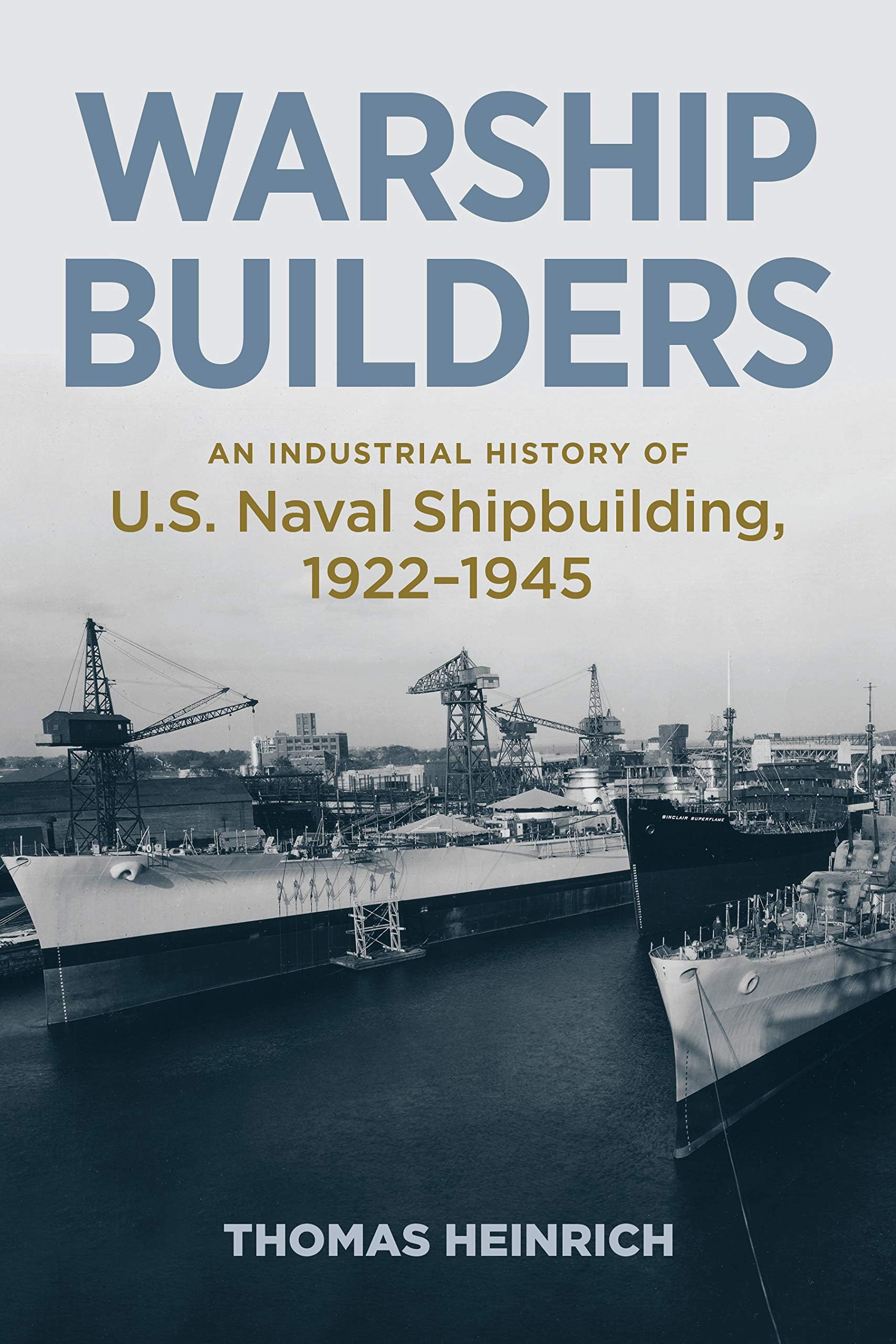
Warship Builders: An Industrial History of U.S. Naval Shipbuilding, 1922-1945 (Studies in Naval History and Sea Power) [Heinrich, Thomas] on desertcart.com. *FREE* shipping on qualifying offers. Warship Builders: An Industrial History of U.S. Naval Shipbuilding, 1922-1945 (Studies in Naval History and Sea Power) Review: Debunks some long-held myths - Most histories of American production in WWII suggest that the "Arsenal of Democracy" was wholly a triumph of private industry, those on shipbuilding using Henry Kaiser's mass production of Liberty Ships as the most prominent example. For a number of reasons, the suggestion that the federal government may have played any positive role in ship construction remains unpopular. "Warship Builders" diverges from those accounts in a number of ways. Firstly, it comes right out and states that the massive expansion and improvement of wartime shipyards would have been impossible without large infusions of taxpayer money taken from the Navy budget, secondly, it details the numerous specialized skills and technologies required in warship construction which were largely inaccessible to civilian yards. Finally, it paints an occasionally less-than-rosy image of the subject, describing some examples where profiteering, racial discrimination, labor disputes, and outright incompetence occurred. Considering that the main body of the text is only about 230 pages long, this book is quite dense but rather ruthlessly efficient, stripped of extraneous BS and leaving behind a factually rich narrative. You get what the title suggests and nothing else, a nice change of pace from books that use fluff to artificially inflate their page counts. It's also meticulously researched, with 64 pages of footnotes and a bibliography that notes at least 400 different sources. Along with the subjects I've already mentioned, it also describes how American shipyards dealt with the sudden dearth of orders after World War I and the effects of the depression and the New Deal, specialized techniques and technologies such as welding, geared steam turbines, armor production, and prefabrication, and the use of subcontractors in the construction of the Fletchers, Clevelands, and Gato- and Balao-class fleet subs. British, German, and Japanese warship construction is also described, not as the same level of detail, but enough to provide some context in comparison. This is obviously a specialty book with a specialty price to boot. Photos, maps, and diagrams are few but they're well-chosen and nicely reproduced. Books on American naval shipbuilding, rather than just the ships themselves, seem to be incredibly rare, and thankfully, this is an exceptionally good one that does a fine job debunking some of the long-held myths on the subject. Review: Great book - This is an exceptional book outlining the pre To end of WW2 ship building programs in the USA Japan and German shipyards. This book is an essential read for every WW2 naval historian or causal history reader. Well written with substantial notes this a great read.




| Best Sellers Rank | #348,495 in Books ( See Top 100 in Books ) #475 in Naval Military History #2,056 in American Military History #2,233 in World War II History (Books) |
| Customer Reviews | 4.5 4.5 out of 5 stars (85) |
| Dimensions | 6.06 x 1.1 x 9.06 inches |
| ISBN-10 | 1682475379 |
| ISBN-13 | 978-1682475379 |
| Item Weight | 1.55 pounds |
| Language | English |
| Part of series | Studies in Naval History and Sea Power |
| Print length | 360 pages |
| Publication date | November 15, 2020 |
| Publisher | Naval Institute Press |
D**R
Debunks some long-held myths
Most histories of American production in WWII suggest that the "Arsenal of Democracy" was wholly a triumph of private industry, those on shipbuilding using Henry Kaiser's mass production of Liberty Ships as the most prominent example. For a number of reasons, the suggestion that the federal government may have played any positive role in ship construction remains unpopular. "Warship Builders" diverges from those accounts in a number of ways. Firstly, it comes right out and states that the massive expansion and improvement of wartime shipyards would have been impossible without large infusions of taxpayer money taken from the Navy budget, secondly, it details the numerous specialized skills and technologies required in warship construction which were largely inaccessible to civilian yards. Finally, it paints an occasionally less-than-rosy image of the subject, describing some examples where profiteering, racial discrimination, labor disputes, and outright incompetence occurred. Considering that the main body of the text is only about 230 pages long, this book is quite dense but rather ruthlessly efficient, stripped of extraneous BS and leaving behind a factually rich narrative. You get what the title suggests and nothing else, a nice change of pace from books that use fluff to artificially inflate their page counts. It's also meticulously researched, with 64 pages of footnotes and a bibliography that notes at least 400 different sources. Along with the subjects I've already mentioned, it also describes how American shipyards dealt with the sudden dearth of orders after World War I and the effects of the depression and the New Deal, specialized techniques and technologies such as welding, geared steam turbines, armor production, and prefabrication, and the use of subcontractors in the construction of the Fletchers, Clevelands, and Gato- and Balao-class fleet subs. British, German, and Japanese warship construction is also described, not as the same level of detail, but enough to provide some context in comparison. This is obviously a specialty book with a specialty price to boot. Photos, maps, and diagrams are few but they're well-chosen and nicely reproduced. Books on American naval shipbuilding, rather than just the ships themselves, seem to be incredibly rare, and thankfully, this is an exceptionally good one that does a fine job debunking some of the long-held myths on the subject.
S**S
Great book
This is an exceptional book outlining the pre To end of WW2 ship building programs in the USA Japan and German shipyards. This book is an essential read for every WW2 naval historian or causal history reader. Well written with substantial notes this a great read.
F**K
Good book
lots of info
A**R
Very good
Very interesting book.
I**N
Informative. Globally. Interesting.
Comprehensive, complete and highly informative research. From technology to finance, from politics to strategy. If you are interested in the history of US and world shipbuilding in the pre-war and war years, I highly recommend.
R**R
Great book on a rarely discussed subject
Great informative book. It dealt with a subject that I was very much interested in as a naval architect and a ship builder. It really covered the issue very well.
J**R
Good writing and details.
Very well written and researched. It makes it all very interesting and engaging.
P**A
Not much detail on actual ship construction.
Keys: The USN had the best boilers and turbines. The USA had a critical shortage of heavy armor plate. The times to build ships of the same class varied greatly by shipyard.
Trustpilot
2 weeks ago
3 weeks ago